Gary's StoryStack
Lovestruck in Manhattan . . . in an INSTANT!

This is the second in a short series of love stories.
Picture this: It’s the 1970s. Low-income New Yorkers, desperate for decent housing, are frustrated: A brand new high-rise apartment building on Manhattan’s Lower East Side, the first public housing project to go up in decades, has stood empty for one full year.
Why?
Because an energetic, youthful Puerto Rican community organizer, Rosita Castillo, discovered that among the building’s elevators, one was a Sabbath elevator, programmed to accommodate Orthodox Jews, whose religion forbids them to perform work on the Sabbath — driving a car, cooking, even pushing an elevator button. A Sabbath elevator goes up or down, stopping at every floor automatically, so that no one has to push a button.
A group of rabbis had struck a deal with the city to make new apartments available to very old, very poor Jewish people who were living in very old public housing, usually the only white people in their buildings, subject to all kinds of harassment: violent physical and verbal assault, dog poop on their doorsteps, swastikas on their doors.
The deal appeared to be a loving, humanitarian effort.
But the Puerto Ricans who lived in the neighborhood weren’t feeling the love: they had been forced to vacate their homes and scramble for other affordable housing to make way for the new building. Rosita found an attorney for the local antipoverty agency, who sued the city, contending that the deal violated a law that said that the former occupants of the site were entitled to all the new apartments.
The attorney arguing for the old, poor Jews countered: “My clients are the real former occupants of the site; they were forced out of their tenements years before the Puerto Ricans moved in, because the city planned to build the Cross Manhattan Expressway through the neighborhood — which it never built.”
The lawsuit led to a public hearing in the courtroom of Federal Judge Morris Lasker, the most revered judge in the Southern District of New York, renowned for his wisdom, fairness and tremendous political courage: he had recently ordered the city to shut down its filthy, brutal prison until conditions improved.
I attended the hearing to continue work on the story I had been covering, in all its nuances, on and off, for two months prior to the hearing.
At one point, a rabbi was testifying, reciting at staggering length the litany of all those horrors that his congregants were experiencing where they now lived — the assaults, the dog poop, the swastikas, and more. On and on, he went. Judge Lasker sat there, silent, patient, seemingly transfixed.
The rabbi, apparently feeling he had failed to make the case, nonetheless plunged ahead, trumpeting his credentials and how important a role he was playing:
“I minister to my congregants’ crises, I minister to troubled teenagers, I minister to people facing bankruptcy, I minister to couples considering divorce, I minister to people’s family problems, I minister to my people’s sadness, I minister to their joys, I minister . . .”
“STOP, Rabbi, STOP!!!” Judge Lasker shouted, shooting his right hand up like a traffic cop’s. And then he leaned in toward the rabbi, as if the two of them were the only people in the courtroom, and he half-whispered, “Tell me, Rabbi, please . . . tell me . . . about the joys.”
And that was the precise instant I fell in love with a federal judge.
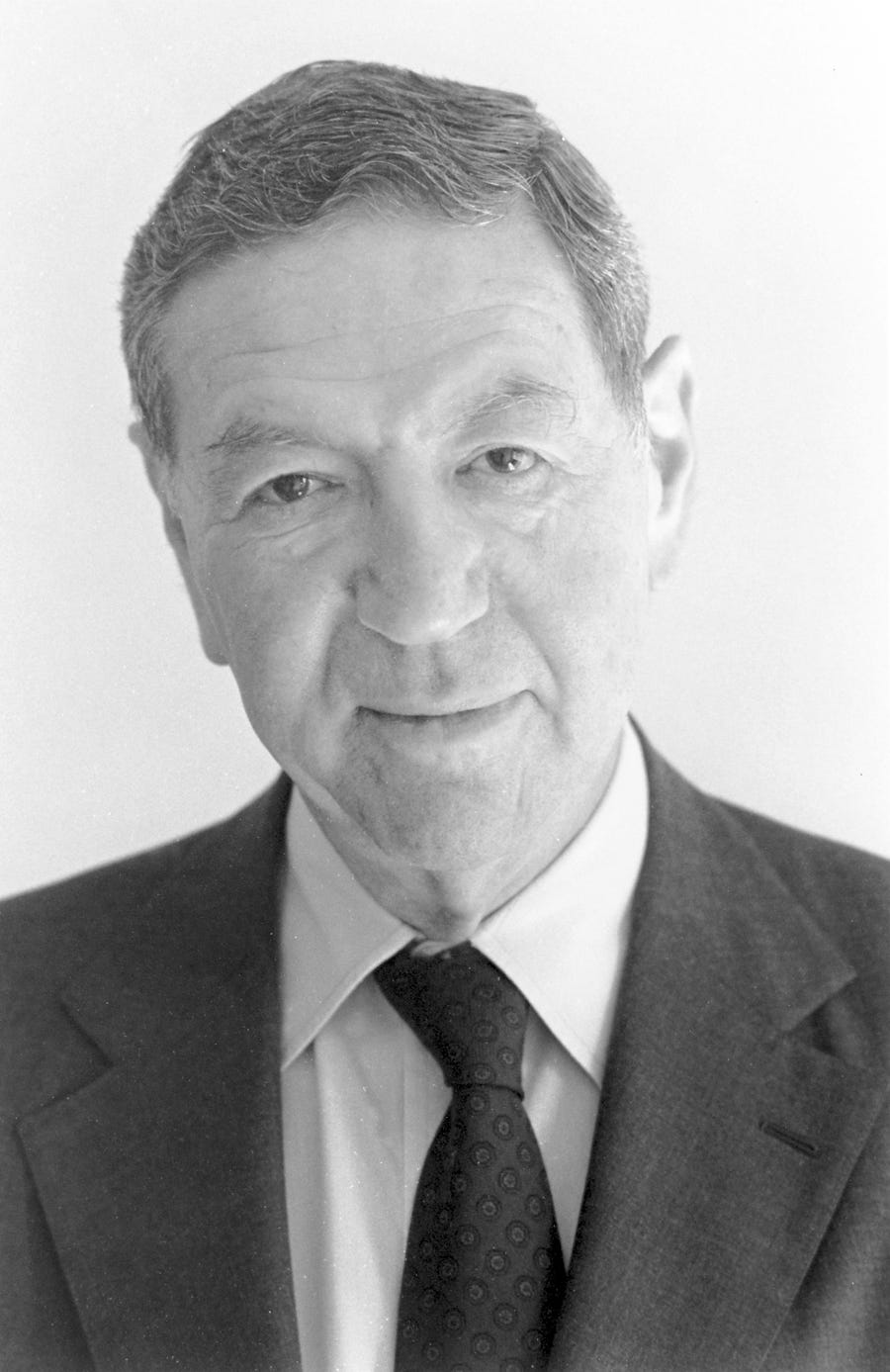
Judge Morris Lasker
After the hearing, I hurried to the judge’s chambers, introduced myself as a reporter for the public television station, and said, “I’d like to ask you for a favor.”
“A FAVOR? You’re asking a federal judge for a FAVOR?”
He grew stern. His eyes narrowed, and he demanded, “What KIND of a favor?
“Your Honor, did you see a New York Times reporter here? No. The Daily News? No. Any commercial TV stations? No. I’m the only reporter here, and with all the work I have done on this story for weeks, I deserve to have it as an exclusive. Here’s the favor I’m asking for. I know that you always file your decisions with the clerk of court at noon. If you do that this time, every news organization in the city will be able to see it long before their deadline, and they’ll do their own story — maybe 40 seconds on TV, or two paragraphs in print.
“My station, on the other hand, will give this story the respect that its complexity deserves. So, I am asking you, please, to file your decision just moments before 5 p.m., when the clerk’s office closes — too late for other reporters to see it — and to alert me earlier in the day, so that I can send a courier to pick it up, and I’ll have the story on the air that night — as an exclusive.”
Judge Lasker, fixed a sterner look at me, paused for several seconds, then said, “I’ll take it . . . under consideration.”
And so, I went back to the TV station and waited. And waited, and waited, hanging by my pinkies and praying that no other news organization would get wind of the story and rob us of our exclusive.
Three weeks later, my phone rings, and I pick it up and say hello. The voice at the other end of the line says only these words:
“This is Judge Lasker. 5 p.m. today.” And he hangs up.
Victory.
I send the courier, read the judge’s decision, edit the final script and go on the air that night. The story runs – not for 40 seconds, but for 43 minutes. It plays out like a mystery, so that the audience has to wait till the very end to find out how the judge ruled.
He awarded many of the new apartments to the very old, very poor Jews and ruled that, as they died off, Puerto Rican families would replace them. A sort of Solomonic decision.
Everybody on both sides of the case seemed satisfied.
Everybody except that energetic Puerto Rican community organizer Rosita Castillo. She was unhappy. I asked her why.
“I know it’s a fair decision,” she said, “but will you do me a favor?”
“A favor?” I said, “What kind of a favor?”
Rosita said, “During the lawsuit, our most uncompromising enemy was Sam Silverstein. Now he suddenly wants to be my best friend. Every day he calls me, four, five times a day, all day long. Will you please get Sam Silverstein to stop calling me?”
I wished her well, but said social work fell outside a reporter’s job description.
I never called my beloved Judge Lasker to thank him, because I knew enough about the way the world works to know that he regarded our conversation as never having happened.
* * *
Thank you for being here.
Please leave a comment.
And please encourage a friend or two to subscribe. One of my subscribers, a fellow Substacker, did just that, and it produced 15 new subscribers in two days. at:
garygilson.substack.com
Cheers,
Gary
Now that’s a mensch
Who knows…. You could have played Cupid for Sam and Rosita… but I suppose that’s out of a reporter’s jurisdiction also