Gary's StoryStack
The temperature's rising, it isn't surprising, we're having a . . . HEAT WAVE.

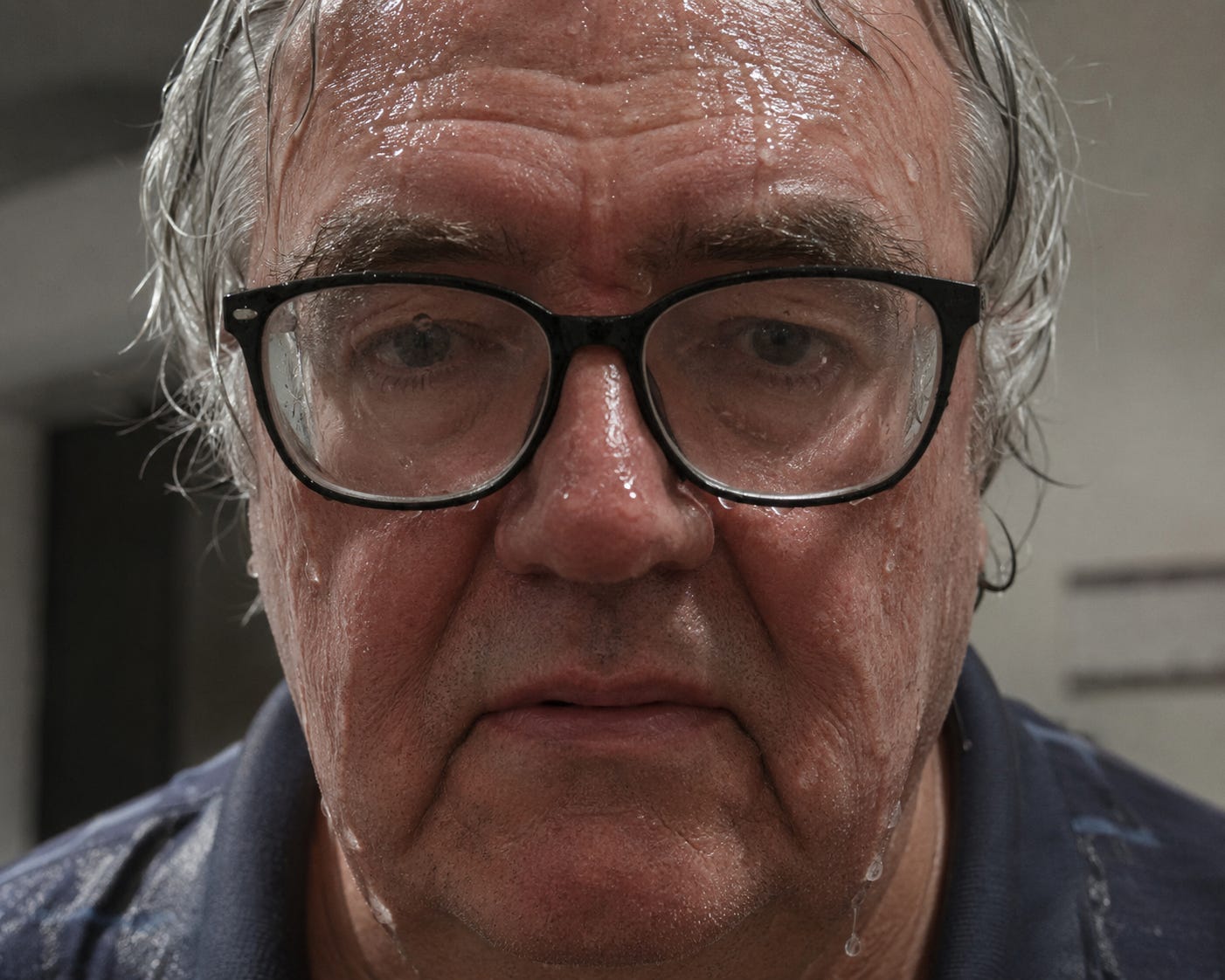
Hot enough for you?
Those four words labored listlessly from the mouth of Harry Arouh, a reporter for the CBS television station in New York City, as he sat on the stoop of a New York City brownstone building, talking to the camera, looking bedraggled and pouring sweat.
Harry was not a TV weatherman; he was Everyman, on the hottest day in the city in many years, a gifted and witty writer who captured the experience of the Eight Million, in a way that made them feel . . . seen.
The camera slowly zoomed in on rivulets of perspiration coursing through trenches on his face. His thick eyeglasses were fogged up, and he looked utterly forlorn.
Instead of showing scenes of New Yorkers’ extreme discomfort, Harry painstakingly droned on, painting word pictures of agonies the heat was causing the city.
· Electrical power out, due to overuse of air conditioning
· Workers trapped in elevators-turned-ovens
· Subway trains stalled, packed with sweltering commuters
· People collapsing on sidewalks
· Frustrated citizens lashing out at each other
That story, presented so personally from that brownstone stoop, connected Harry to every viewer as no other story he had ever done, making him forever memorable.
After his time at the CBS station, Harry and I worked together, teaching journalism at Columbia University.
He was more than a reporter; he was a reporting artist.
But he had a problem: he was losing his eyesight. He had fallen off a horse and hit his head on the ground, causing cataracts. He declined standard eye surgery, after which he would have had to lie rigid in bed, with his head between sandbags for who knows how long.
Instead, after researching options, he chose a new technique – ultrasonic surgery, which uses a small incision and removes fluid and debris from the lens, involving a quick recovery . . . as performed by a superstar surgeon named Charles Kelman.
Harry told me about his consultation with Dr. Kelman:
“I was sitting in a small waiting room for quite some time. Suddenly the wall opposite my chair slid open, revealing Dr. Kelman on a kind of throne. He described the procedure he would use on me, and he told me to show up the next Monday morning with $900 in cash.”
If that seems odd, you should know a few other things about Dr. Kelman:
· He performed 20 or so procedures in New York City each week, and helicoptered to New Jersey to do 20 more.
· He invented surgery apparatus, and his company was selling units to hospitals all across the country.
· He had once operated on the great jazz vibraphonist Lionel Hampton, who, in gratitude, invited the good doctor to bring his clarinet and sit in as a sideman during a Hampton concert at Carnegie Hall.
Harry underwent successful surgery performed by Dr. Kelman. The whole scenario so intrigued me that I decided to research eye surgery and do a TV story about it.
I can’t remember how I met the immigrant Romanian doctor who devoted eight hours of his time to teach me about eye surgery. For free.
He also gave me a book about the procedure, in Japanese (with photos). And he introduced me to Dr. Richard Troutman, one of the world’s most renowned pioneers in the technology of eye surgery, who invited me to join him and observe a procedure he was about to perform.
I wanted to witness the procedure on my own, before committing a camera crew to film a story.
I showed up at 7:30 one morning, saw various doctors in their locker room donning surgical garb, and I accompanied Dr. Troutman to his operating room. His patient, an elderly woman, was lying on the operating table. He told me to stand just off to his left, where I could observe. I said, “I’m squeamish, Doctor, and I’m worried about watching this.”
He said, “Don’t worry. There are doctors in this hospital who operate on stomachs, and they can’t watch eye surgery. It’s nothing to be ashamed of. If you start feeling queasy, just ease back onto the chair behind you, bend over, put your head between your legs, and you should be all right.”
Emboldened by that advice, I stood next to Dr. Troutman.
But . . . as he reached in the direction of the first implement, I felt faint, and I sagged back into the chair, and put my head between my legs. I have no idea how long I stayed in that position, but when I revived, the operation was over. I had seen nothing.
Dr. Troutman suggested that, since I could not watch eye surgery up close, I might consider going down the hall, to where Dr. Kelman was operating, and watch on closed-circuit TV.
I instantly but politely declined, thanked Dr. Troutman for his generosity and understanding, and . . . I abandoned the project.
But I did get an education.
And of all the things I learned, maybe this was the most interesting: Dr. Kelman was so thrilled by his playing with the Lionel Hampton band that he was seriously considering abandoning his medical career for a new start in jazz.
* * *
Thank you for being here. Please leave a comment. And please encourage others to subscribe, at:
garygilson.substack.com
Cheers,
Gary
Hello Gary in the midst of our Minnesota Heat Wave! Fun to read another of your great stories and that you were light headed. Yes as a tall person, I have had to sit on stools to assist when I was in med school at the U of M in Minneapolis, and then as an intern in Duluth and later when I was on the staff at St Cloud Hospital….to avoid the light headedness, and not fall head over heals in the OR. Thanks again for your personal heart felt stories over the years and keep them coming in a good way. :-)
When we lived in NYC during my residency at St. Vincent’s in the early 70’s, Shea had several different medical assistant positions, including a brief stint with Dr. Kelman. She never flew with him but was very impressed with his efficient use of helicopter to soar over traffic.