Gary's StoryStack
A subversive act in the 1970s . . . but hidden until now . . .

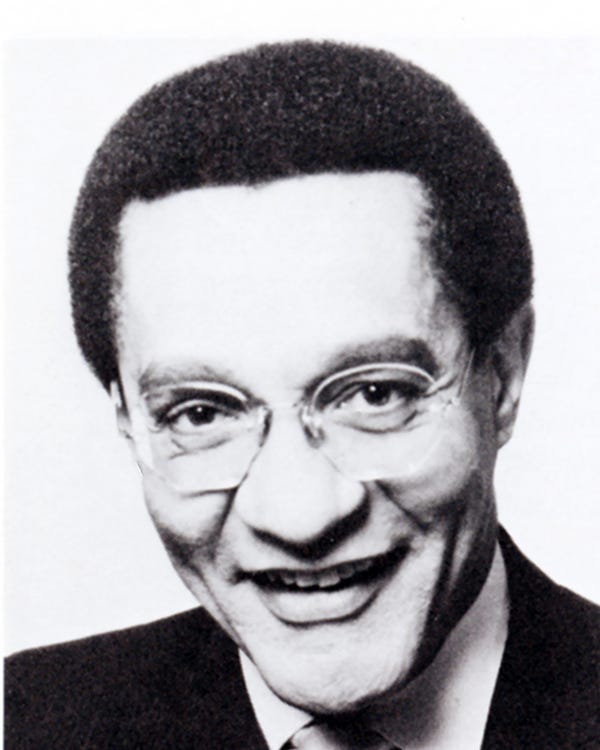
Tony Brown
The longest running public affairs series on PBS was Black Journal, which addressed matters of race, with brains and bite, from 1968 to 2008. Its creator and host was Tony Brown, a major figure in the network’s history. A few days ago, he died, at 93.
We both worked at the public TV station in New York City, on separate programs. This story concerns the only subversive act of my career.
One day, the program director called me into his office and handed me a videotape of a Swedish documentary about Harlem. He asked me to screen it and then tell him what I thought about it.
I watched the film and found it atrocious — painfully typical of Northern European filmmakers’ arrogant efforts to claim moral superiority for themselves by portraying all of America as uniformly brutal to all Black people.
In the worst scene in the film, an unctuous Black doctor at Harlem Hospital, describing his work with poverty-stricken Black patients, looks down his nose with contempt as he says, “It’s extremely difficult, dealing with . . . these people.”
The only redeeming feature of the film, to my mind, involved a brief sequence in which we meet a Black social worker, an impressive man in his mid-30s; he tries to steer Black teenagers away from trouble. The interviewer asks how it’s going; the social worker replies:
“Let’s say some kids snatch a purse and try to escape from the police by running up the stairs of one of these tenement buildings. Then they run across the rooftop to jump to the roof of another building. But the police invariably catch them because, you understand, the Establishment has outfitted the brothers with high-heeled shoes.”
A slice of life that says a lot about society in just a few words.
I reported back to the program director that I thought the film was distorted and inflammatory.
He said, “I’ve already bought the film, and we’re going to run it a week from Sunday night.”
Given the fact that he’d already made his decision to buy the film and run it, I wondered to myself why he’d asked me to screen it.
I hurried back to my office and phoned Tony Brown, in the office of Black Journal, and alerted him about the station’s plan to air this awful film. He thanked me, and he let enough time pass so that the program director would not identify me as the leaker. Then he marched into the program director’s office, told him he’d just learned about the film, and he demanded one hour of air time to follow its broadcast immediately with a live discussion about it.
Brown got his hour, and his follow-up program delivered a bruising appraisal of the documentary.
That was a good thing.
But I got tremendous satisfaction from the fact that, on the Sunday night prior to our station’s showing of the film, the weekly program 60 Minutes showed an excerpt that CBS had bought from the Swedish filmmakers. It showed that Harlem Hospital doctor, in contrast with the Black social worker and his story about the Establishment and those high-heeled shoes.
Delicious television.
* * *
Thank you for being here.
Please encourage others to subscribe. One of my subscribers, a professional writer named Kevin Coyne, recently did just that, and his effort has so far produced 23 new subscribers.
You’ll find my posts at:
garygilson.substack.com
Cheers,
Gary
Thanks again Gary for another great story from times of “yore”. Thanks for continuing your writing in a good way. :-)